
Watchtower Study, “Article 43”, Week of December 29, 2025, to January 4, 2026, Let Us Not Forget to Pray for Others, Comments and Responses.
6 months ago · Updated 6 months ago
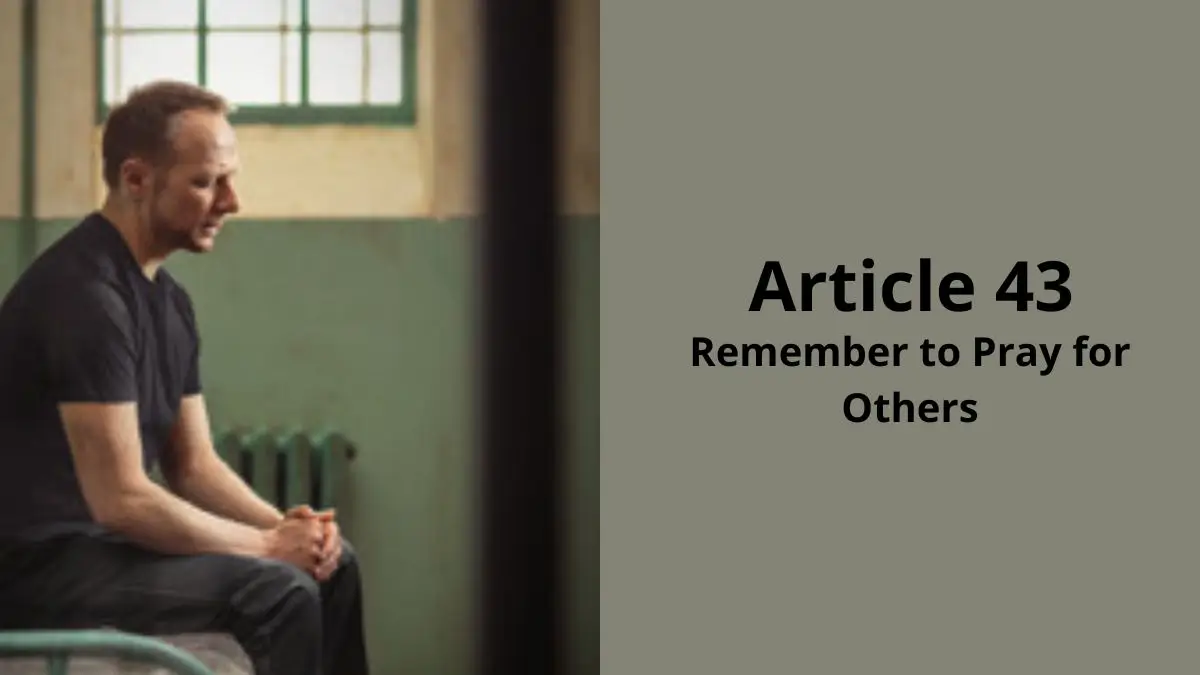
In this Watchtower article, we will be analyzing the advice found in Jas 5:16, where we are encouraged to pray for one another. We will be analyzing the article through four subtopics, which are as follows: Why is it important? Who needs our prayers? What should we do when we pray for specific brothers? And Let us be balanced.
“Pray for one another […]. The prayer of a righteous person has great power” (JAS. 5:16).
- 1. How do we know that our prayers are important to Jehovah?
- 2. What fine example did the apostle Paul leave us?
- 3. Why might we sometimes forget to pray for others?
- WHY IS IT IMPORTANT?
- 4, 5. In what sense do prayers for others have “great power”? (James 5:16)
- 6. How does praying for others affect our feelings? (1 Peter 3:8)
- 7. Why does praying for others help us see our own problems in the right perspective? (Philippians 2:3, 4; see also the images)
- WHO NEEDS OUR PRAYERS?
- 8. For whom can we pray?
- 9. Why should we pray for brothers with responsibilities in Jehovah’s organization and for their wives?
- 10, 11. Does Jehovah like prayers that include many brothers?
- WHAT SHOULD WE DO WHEN PRAYING FOR SPECIFIC BROTHERS?
- 12. Why does being observant help us make more specific prayers?
- 13. Can we pray for brothers we do not personally know?
- 14, 15. What helps us make more specific prayers?
- BE BALANCED
- 16. What should we keep in mind when praying? (Matthew 6:8)
- 17, 18. Explain with an example why our prayers do not go unnoticed by Jehovah.
- WHAT WOULD YOU ANSWER?
1. How do we know that our prayers are important to Jehovah?
We know that our prayers are important to Jehovah because he has personally taken on the role of listening to them. Although he has entrusted many responsibilities to the angels and to his Son, Jehovah is described as “the Hearer of prayer,” and he wants to listen to them himself. This shows that prayer is an extraordinary gift and that Jehovah deeply values our approaching him through prayer.
ADDITIONAL COMMENTS
We know this because, even though Jehovah has delegated duties to the angels and assigned many responsibilities to his Son, the Bible states that he is the one who “hears prayers.” This makes it clear that he wants to listen to them personally. Therefore, prayers are very important to him.
Since prayer is a gift—not something we earned, but something Jehovah God lovingly gave us—it is extremely valuable. Through prayer, we can be confident that Jehovah will protect us, support us, and give us the strength to endure whatever situation we may be facing.
Psalm 65:2 says that Jehovah listens to people of all kinds. This is very encouraging because it shows that he listens not only to those with authority but also to ordinary people. Jehovah listens to each individual with love and care, regardless of the privileges they may have in the congregation.
Psalm 91:11 explains that God has assigned many tasks to the angels, and we know that on several occasions he communicated with humans through an angel. In addition, at Matthew 28:18, Jesus Christ states: “All authority has been given me in heaven and on the earth.” Even so, Jehovah personally listens to the prayers of each individual. This clearly shows how important prayer is to him.
2. What fine example did the apostle Paul leave us?
The apostle Paul set a fine example by praying not only about his own concerns but also for others. Even though he faced many personal challenges, he made time to mention entire congregations as well as individual brothers in his prayers, showing genuine interest and love for them. This teaches us to be consistent and thoughtful when praying for others.
ADDITIONAL COMMENTS
Paul had many personal concerns that he could have prayed about. Even so, he still made time to pray for others.
He wrote to Timothy: “I thank God as I remember you constantly in my supplications night and day.” This shows that despite his busy life and responsibilities, he took time to pray for others.
The apostle Paul had many reasons to feel anxious. He wrote this letter while imprisoned in Rome during his first imprisonment. He also referred to having a “thorn in the flesh,” likely a serious health problem. So he had plenty of reasons to feel overwhelmed. Yet, he kept his fellow believers and the congregations in mind and prayed for them.
Paul prayed for groups, such as congregations, and also for specific individuals, making room in his prayers for concerns beyond his own.
3. Why might we sometimes forget to pray for others?
At times, we may forget to pray for others because life in this system is very fast-paced. We can become so focused on our own problems and needs that our prayers end up revolving only around ourselves.
ADDITIONAL COMMENTS
Sometimes we forget to pray for others because, as Sabrina mentioned, life in this system is unstable. We may become so absorbed in our own problems that we pray only about what we personally need.
This article will help us understand why praying for others is important and how to do so, along with practical suggestions.
WHY IS IT IMPORTANT?
4, 5. In what sense do prayers for others have “great power”? (James 5:16)
Prayers offered on behalf of others have “great power” because Jehovah takes them into account and may act in favor of the person prayed for, as long as it aligns with his will. While we cannot force Jehovah to act, he considers our concerns and may respond by doing what we ask. This encourages us to approach Jehovah in prayer when we are troubled and to trust that he will act in the best possible way.
ADDITIONAL COMMENTS
A clear example is that of the apostle Peter. Jesus knew that Peter would deny him and understood how deeply that could affect him. For that reason, Jesus prayed to Jehovah that Peter’s faith would not fail.
The apostle Paul also understood the powerful effect of prayer. While under arrest, he told the brothers: “I hope to be restored to you through your prayers.” He trusted that their prayers could contribute to his release.
Praying sincerely and then leaving the matter in Jehovah’s hands brings peace. It reminds us that we are not the ones in control—Jehovah is, and he loves us and knows exactly what is best.
James 5:16 states: “The prayer of a righteous person has great power.” This verse helps us place all our burdens in God’s hands, confident that he will act.
Some may wonder why we should ask Jehovah for anything since he already knows what we need. The paragraph does not suggest that we can force Jehovah to act, but it does indicate that when Jehovah has several possible options, our prayers may influence which course he chooses. The idea that our prayers can play a role in Jehovah’s decisions is truly impressive.
Second Corinthians 1:11 mentions “help by means of prayer,” and a footnote refers to “earnest supplication.” This describes a humble and sincere plea directed solely to God. As stated, this does not mean we force Jehovah to respond, but these prayers “can greatly influence what God does and when he does it.” This highlights how powerful prayer truly is.
The verse also refers to action taken in response to the prayers of many. A footnote explains this as “because of many faces in prayer.” This idea is illustrated in the video Does Jehovah Answer Prayers? featuring Caleb, where we see how collective prayers reach Jehovah and have real effects.
The Insight entry on “Prayer” also offers an important perspective: it is not just the number of people praying that matters, but the depth of united concern they show. When Jehovah’s servants collectively demonstrate deep interest and concern, it may influence Jehovah to act.
Of course, we must also remember that Jehovah does not always answer prayers immediately or in the way we expect.
6. How does praying for others affect our feelings? (1 Peter 3:8)
Praying for others positively affects our emotions because it helps us cultivate tender compassion. As we think about the needs and suffering of others, we become more aware of their struggles, grow closer to them, and feel greater love. It also moves us to want to help them in practical ways, strengthening bonds of love and empathy.
ADDITIONAL COMMENTS
Praying for others forces us to observe our brothers and sisters and focus on what they are experiencing, making us more aware of their needs.
When we pray for others, we must explain to Jehovah why we are praying and what we are asking for. This makes us more aware of how we can help and motivates us to do so. How beautiful it is to think that when we help someone after praying for them, it is as though we are helping answer that prayer ourselves.
Putting ourselves in the place of someone who is suffering is essential. When Jesus saw the leper who begged for help, the Bible says he was moved with compassion and acted. Compassion involves sharing feelings, feeling sorrow, and wanting to help. When we reflect on someone’s emotions, we feel their pain and are moved to assist them.
A footnote in First Peter explains that the word translated “empathy” can also mean “sharing the same suffering.” Jesus did more than heal the leper—he touched him. He did not have to do so, but consider how many years that man may have gone without human touch. In that way, Jesus went beyond simply curing him.
7. Why does praying for others help us see our own problems in the right perspective? (Philippians 2:3, 4; see also the images)
Praying for others helps us view our own problems correctly because it reminds us that we are not the only ones facing difficulties. When we think about and pray for the trials our brothers around the world are experiencing, we stop focusing only on ourselves and recognize that everyone suffers in this system. This helps us maintain humility and balance when dealing with our own challenges.
ADDITIONAL COMMENTS
When we pause to consider what our brothers need so we can mention them in prayer, we naturally stop dwelling on our own problems. In this way, we apply Philippians 2:3 by viewing others as more important than ourselves and recognizing that their struggles also deserve Jehovah’s help.
A pioneer shared an experience showing another benefit: thinking about the difficulties of the brotherhood helps us realize that others also face serious challenges, which causes our own problems to feel lighter.
In a previous Watchtower, we studied Elijah, who thought he was the only prophet left loyal to Jehovah. In reality, thousands remained faithful. Learning this helped him. Praying for others can have the same effect on us.
We must remember that the situation today is extremely difficult for all brothers, as Revelation 12:12 explains that Satan is active on the earth, causing widespread suffering. Because of this, we truly need to pray for one another.
The images illustrate this beautifully: a girl prays for brothers affected by a natural disaster; those brothers pray for a brother in prison; he prays for an elderly sister in the hospital; and she prays for young children defending their faith at school.
Each person has personal struggles, yet they all pray for others. This creates a network of support through prayer. All these prayers reach Jehovah, and he listens to each one. How comforting it is to belong to a brotherhood that prays for one another.
Prayers are very valuable. They help brothers facing many different problems, and no special resources are needed—our prayers alone can be a powerful form of support.
WHO NEEDS OUR PRAYERS?
8. For whom can we pray?
We can pray for many groups, such as those with health problems, young people facing pressure or ridicule at school, and elderly brothers and sisters. We can also pray for those experiencing opposition from family members or governments, those forced to flee their homes because of political instability, and those affected by natural disasters. Even if we do not know them personally, praying for them shows love and obedience to Jesus’ command to love one another.
ADDITIONAL COMMENTS
We can pray for different groups, including those with health issues and young people dealing with ridicule or negative pressure at school.
We can also pray for older brothers and sisters and those facing family opposition.
We do not need to know them personally. When we pray for brothers suffering hardships—such as those affected by disasters in other regions—we show love. In turn, they may also pray for us. This reflects the love we are commanded to practice.
Sometimes we feel that prayer is the only way we can help. In reality, it is one of the most valuable ways. Prayer is an expression of love, as John 13:34 reminds us.
9. Why should we pray for brothers with responsibilities in Jehovah’s organization and for their wives?
We should pray for brothers with organizational responsibilities because they carry heavy workloads while also dealing with personal concerns. Many exhaust themselves in service to others while facing their own challenges.
Praying for them shows appreciation, love, and support. It also acknowledges their efforts. Praying for their wives is equally important, as their loyal support enables these brothers to continue serving the congregation faithfully.
ADDITIONAL COMMENTS
These brothers also face many worries and problems, yet, as 2 Corinthians 12:15 shows, they willingly exert themselves for others.
A circuit overseer mentioned that one of his greatest challenges was being far from his elderly, ill parents. Although his sister cared for them lovingly, he felt pain at not being able to do more. Brothers with responsibilities often balance heavy workloads and family concerns.
The organization also reminds us to pray for their wives. Many members of the Governing Body, branch committees, elders, and traveling overseers have spouses who loyally support them. Remembering these sisters in prayer shows that we value them deeply.
These brothers imitate Paul’s example of self-sacrifice. When we pray for them, Jehovah will care for us as well.
10, 11. Does Jehovah like prayers that include many brothers?
Yes, Jehovah appreciates prayers that include many brothers. Since we do not know the specific needs of everyone, general prayers that include large groups—such as those imprisoned or those grieving—are appropriate. These prayers show love for the entire brotherhood and sincere concern for all.
ADDITIONAL COMMENTS
So-called “umbrella prayers” ensure that no one is left out. They show love for all brothers, even those we do not know personally.
Jesus himself prayed this way, as recorded at John 17:20. Paul also encouraged such prayers at Ephesians 6. This shows that Jehovah approves of them.
This is especially important in public prayers, which are heard not only by Jehovah but also by others. Broad prayers ensure inclusiveness.
WHAT SHOULD WE DO WHEN PRAYING FOR SPECIFIC BROTHERS?
12. Why does being observant help us make more specific prayers?
Being observant helps us identify specific needs and struggles, enabling us to pray in a more detailed and personal way. This develops empathy and motivates us to go beyond general requests.
ADDITIONAL COMMENTS
Being observant builds empathy and encourages us to pray about specific circumstances. Making a list can help ensure we do not forget anyone.
We are encouraged to notice those struggling with chronic illness, academic pressure, single parenting, and other challenges, and to pray for them sincerely.
A video example showed a brother who prayed for each congregation member by name, even when he became ill and limited in activity. His prayers deeply affected those he prayed for.
13. Can we pray for brothers we do not personally know?
Yes, we can pray for brothers we have never met. We may even mention them by name, such as imprisoned brothers whose information is available on jw.org. Doing so helps us remember them more personally and shows genuine love.
ADDITIONAL COMMENTS
Their experiences and names help us connect emotionally and pray more thoughtfully.
14, 15. What helps us make more specific prayers?
Putting ourselves in others’ situations helps us think of specific details to include in our prayers. Reading experiences, reflecting on daily challenges, and mentioning individuals by name all help us express deep love.
ADDITIONAL COMMENTS
Hebrews 13:3 encourages us to remember prisoners as if imprisoned with them. This perspective helps us pray with greater detail and compassion.
Quality prayers take time, reflection, and sincere thought—just as Paul demonstrated.
BE BALANCED
16. What should we keep in mind when praying? (Matthew 6:8)
We should remember that Jehovah already knows all needs. We do not pray to inform him or direct him, but to express love and concern for others. Praying for others brings Jehovah great joy.
ADDITIONAL COMMENTS
Our prayers show appreciation, trust, and love. Jehovah values that deeply.
17, 18. Explain with an example why our prayers do not go unnoticed by Jehovah.
Jehovah notices our prayers because they reflect love for our brothers.
Like a father who is pleased when a daughter asks him to care for her sick brother—even though he already is—Jehovah is happy when we pray for others. He values our sincere concern, even when results are not immediate.
WHAT WOULD YOU ANSWER?
In what sense do our prayers have “great power”?
First, Jehovah considers them and may act in harmony with his will.
Second, praying for others transforms our feelings, cultivating compassion and motivating practical help.
Third, it helps us view our own problems more realistically and avoid self-centeredness.
Why should we pray for groups of brothers?
Because many face similar challenges, and we may not know individual details. Group prayers show love, unity, and obedience to Jesus’ command to love one another.
What can we do when praying for specific brothers?
We can be observant, mention them by name, and make specific requests based on their circumstances—showing sincere, abundant love.
ADDITIONAL COMMENTS
We learned three key ideas: be observant, mention names, and make specific requests.
Leave a Reply
Related posts