
Watchtower Study, “Article 42”, Week of December 22-28, 2025, How to Improve Your Prayers, Answers.
7 months ago · Updated 7 months ago
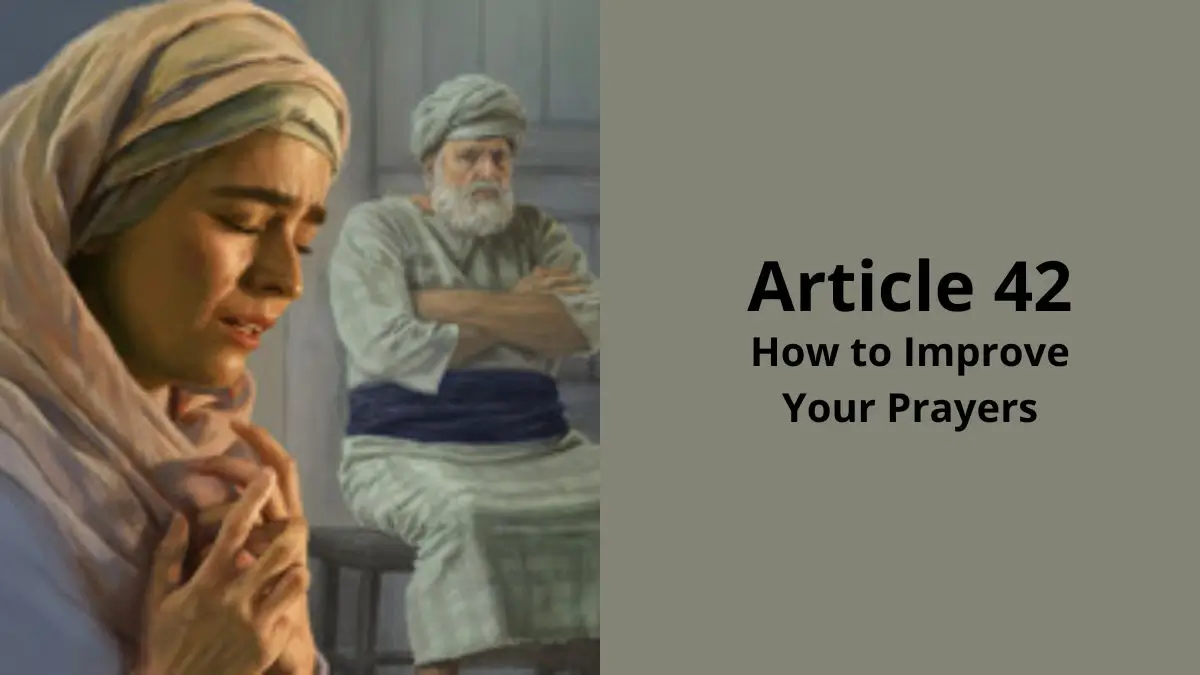
“I call with all my heart. Answer me, O LORD” (Ps. 119:145).
This Watchtower article is based on Psalm 119:145 and is titled “How to Improve Your Prayers.” It will analyze four subtopics, including “Don't Be Afraid to Pray to Jehovah,” “How You Can Make Your Prayers More Meaningful,” “Meditate on the Prayers of Bible Characters,” and “Keep Praying to Jehovah to Draw Closer to Him.”
1, 2. a) What can make our sentences monotonous or superficial?
At times, our prayers may lose depth simply because of the rhythm of daily life. When we are exhausted or overwhelmed by responsibilities, we may end up repeating the same short expressions or offering very brief prayers.
Another factor may be feeling unworthy or hesitant to express our true emotions to Jehovah. However, the Psalms clearly show that Jehovah values honesty more than eloquence. He does not expect perfect wording but sincere feelings.
So, if we notice that our prayers seem shallow or repetitive, this does not mean we are failing spiritually. Rather, it serves as a reminder to pause and remember that Jehovah wants to hear us exactly as we are.
1, 2. b) How do we know that Jehovah pays attention to everything we say to him?
We can be confident that Jehovah listens attentively because the Bible assures us that nothing we say escapes his notice. Psalm 10:17 tells us that Jehovah listens to the requests of the meek, while Psalm 139:1-3 explains that he knows our actions, thoughts, and circumstances completely.
This confirms that Jehovah understands not only our words but also the emotions and intentions behind them. He does not require special language or carefully crafted phrases. Knowing this allows us to speak freely, without fear, shame, or hesitation.
3. What questions will we answer in this article?
This article will address four key questions.
First, we will examine why we should feel no fear when expressing our deepest thoughts and emotions to Jehovah.
Second, we will consider practical ways to make our prayers more meaningful and heartfelt.
Third, we will see how the prayers recorded in the Bible can guide and enrich our own prayers, since they often reflect feelings similar to ours.
Finally, we will discuss what to do when emotional pain makes it difficult to find words. Jehovah understands such moments and lovingly provides support.
These four questions will help us strengthen our communication with Jehovah and deepen our appreciation for prayer.
- 1, 2. a) What can make our sentences monotonous or superficial?
- 1, 2. b) How do we know that Jehovah pays attention to everything we say to him?
- 3. What questions will we answer in this article?
- 11. How does meditating on the prayers of some of Jehovah’s servants from Bible times help us? (See also the box “Do You Identify?”)
- 12. What questions can we ask ourselves when reading a sentence?
- 13. What is one lesson we learn from Hannah's prayer? (1 Samuel 1:10, 11; see also the picture.)
- 14. a) What other lesson can we learn from Ana's example?
- 14. b) How can meditating on the Bible enrich our prayers? (See footnote.)
- 15. What do we learn from Jeremiah's prayer? (Jeremiah 12:1).
- 16. What do we learn from the prayer of an exiled Levite? (Psalm 42:1-4; see also the pictures.)
- 17. a) What do we learn from Jonah's prayer? (Jonah 2:1, 2).
- 17. b) How can some expressions from the Psalms help us when we go through difficult times? (See note).
Do not be afraid to pray to Jehovah
4. What will help us to open our hearts to Jehovah? (Psalm 119:145)
Viewing Jehovah as a loving Father and a loyal Friend greatly helps us open our hearts to him. The writer of Psalm 119 faced severe trials, false accusations, and personal weaknesses, yet he did not hesitate to cry out to Jehovah with his whole heart, as Psalm 119:145 shows.
This example teaches us to approach Jehovah with confidence, not fear. The more we reflect on his patience, love, and understanding, the easier it becomes to speak honestly. Jehovah wants our prayers to reflect who we truly are, spoken with trust and sincerity.
5. Why shouldn't we let negative feelings stop us from praying? Give an example.
Negative emotions should never prevent us from praying, because Jehovah invites even those who have made serious mistakes to come to him, as stated in Isaiah 55:6, 7. He does not want guilt or shame to push us away; instead, he wants us to view him as a forgiving Father.
The illustration of a pilot makes this clear. If a pilot drifts off course, embarrassment would never stop him from asking for guidance. Likewise, when we make mistakes, that is precisely when we most need to pray. Jehovah wants to help us regain direction and inner peace.
How you can make deeper prayers
6, 7. What will help us to make deeper sentences? Give an example (see also the note).
Praying with greater depth becomes easier when we speak honestly about our emotions and reflect on Jehovah’s qualities. Thinking about his compassion, patience, and loyal love encourages openness.
For example, Sister Kristine struggled to view Jehovah as a Father due to a painful upbringing marked by violence. She feared her imperfections would push him away. However, by meditating on Jehovah’s loyal love, she came to see him as someone who supports and lifts her when she falls. This reflection transformed the way she prayed.
Likewise, reflecting on how Jehovah has treated us personally helps our prayers become more heartfelt and meaningful.
8, 9. What are some benefits of thinking in advance about what to say to Jehovah? Give an example.
Planning what we want to say to Jehovah helps us pray with clarity and purpose. We might ask ourselves: What is troubling me right now? Do I need to forgive someone? What decisions require guidance?
This prevents prayer from becoming routine and allows it to be specific and focused, as shown in 2 Kings 19:15-19. It also helps us include spiritual priorities, such as Jehovah’s name and Kingdom.
Aliska’s experience illustrates this. When her husband became seriously ill, she felt overwhelmed and struggled to pray. By taking time to organize her thoughts, her prayers became calmer and more focused, bringing her peace and strengthening her bond with Jehovah.
10. Why is it good for us to take time to pray? (See also the images.)
Taking time to pray allows us to express our feelings and needs more fully. While brief prayers are valuable, longer prayers often deepen our relationship with Jehovah.
Elijah’s example shows this clearly. He prayed regularly throughout the day and noticed that spending time speaking with Jehovah strengthened their relationship.
Jehovah is never in a hurry. Finding a quiet place, praying aloud, or setting aside specific times can help us develop the habit of meaningful prayer.
Additional Comment
Setting aside quiet moments for prayer helps us express our concerns more deeply. Regular, heartfelt prayer strengthens our relationship with Jehovah and draws us closer to him.
Meditate on the prayers of biblical characters
11. How does meditating on the prayers of some of Jehovah’s servants from Bible times help us? (See also the box “Do You Identify?”)
Reflecting on biblical prayers gives us examples of how to open our hearts. The prayers of Jacob, Hannah, David, Solomon, and others reveal faith, gratitude, repentance, and supplication.
Rather than copying words, we draw inspiration from their sincerity and emotional honesty. Their experiences mirror our own struggles, joys, and responsibilities.
Seeing how Jehovah responded to them reassures us that he listens and acts. These prayers expand our spiritual vocabulary and remind us that open, honest communication with our Father is normal and welcomed.
12. What questions can we ask ourselves when reading a sentence?
When reading a passage, we might ask: Who spoke these words? Under what circumstances? What emotions are expressed? How does this relate to my situation? What lesson can I apply?
These questions help us understand the context and apply the message personally. Researching the background may require effort, but it transforms Bible reading into a valuable aid for prayer.
13. What is one lesson we learn from Hannah's prayer? (1 Samuel 1:10, 11; see also the picture.)
Hannah’s prayer teaches us that we can pour out our deepest pain to Jehovah without restraint. She expressed her anguish honestly and made a heartfelt vow.
As she continued praying, she received comfort and eventually the answer she longed for. This teaches us to entrust our burdens to Jehovah, describe our struggles clearly, and trust that he hears us. Honest prayer lightens emotional burdens and strengthens faith.
14. a) What other lesson can we learn from Ana's example?
Hannah also teaches us the importance of gratitude. After receiving a blessing, she kept her promise and expressed her thankfulness by dedicating Samuel to Jehovah.
This reminds us that gratitude helps us endure ongoing challenges by focusing on Jehovah’s blessings.
14. b) How can meditating on the Bible enrich our prayers? (See footnote.)
Meditating on the Bible enriches our prayers by teaching us balance—how to combine requests, thanksgiving, praise, and confession.
Learning from how faithful servants spoke to Jehovah prevents prayer from becoming a simple list of requests and transforms it into meaningful dialogue.
15. What do we learn from Jeremiah's prayer? (Jeremiah 12:1).
Jeremiah shows us that it is acceptable to express frustration respectfully. Although he questioned why the wicked prospered, he did not accuse Jehovah unjustly.
This teaches us to be honest in prayer, expressing difficult emotions while trusting Jehovah’s justice and timing.
16. What do we learn from the prayer of an exiled Levite? (Psalm 42:1-4; see also the pictures.)
Psalm 42 shows that we can express sorrow and longing openly while maintaining hope. The Levite acknowledged his pain but reminded himself of Jehovah’s faithfulness.
Speaking honestly to Jehovah helps organize emotions and restores perspective, allowing hope to grow even in distress.
17. a) What do we learn from Jonah's prayer? (Jonah 2:1, 2).
Jonah’s prayer teaches us that even after serious mistakes, we can turn to Jehovah. In deep distress, Jonah remembered the Psalms and cried out for help.
17. b) How can some expressions from the Psalms help us when we go through difficult times? (See note).
The Psalms provide words when our own fail us. Memorizing them allows comforting expressions to come to mind during crises, helping us express trust and hope.
Keep praying to Jehovah to draw closer to him
18, 19. How does Romans 8:26, 27 help us if we cannot find the words to express to Jehovah what we feel? Give an example.
Romans 8:26, 27 assures us that when words fail, the holy spirit intercedes on our behalf. Jehovah understands even unspoken feelings.
Sister Elena’s experience shows this. Though exhausted and unable to pray while imprisoned, she found comfort knowing Jehovah accepted her silent cries.
20. What will help us prepare our minds to pray when we are under a lot of stress?
Writing down feelings or taking a few moments to organize thoughts can calm the mind. These methods help prayer remain focused, even during stress.
21. Why can we open our hearts to Jehovah?
Jehovah knows us completely and values honest expression. Psalm 139:4 assures us that he understands our thoughts even before we speak.
There is no need to pretend. Sincerity draws us closer to Jehovah and helps us carry our burdens.
What would you answer?
What will help us not to be afraid to pray to Jehovah?
Viewing him as a loving Father and faithful Friend.
What can we do to make our prayers deeper?
Meditate on Jehovah’s qualities, organize our thoughts, and set aside time for sincere prayer.
How does meditating on the prayers of biblical figures benefit us?
It provides models of sincerity, comfort in distress, and balance between asking, thanking, and praising.
Leave a Reply
Related posts