
The Watchtower Study, “Article 44,” Week of January 5-11, 2026, Maintain Your Joy in Old Age, Answers.
3 months ago · Updated 3 months ago
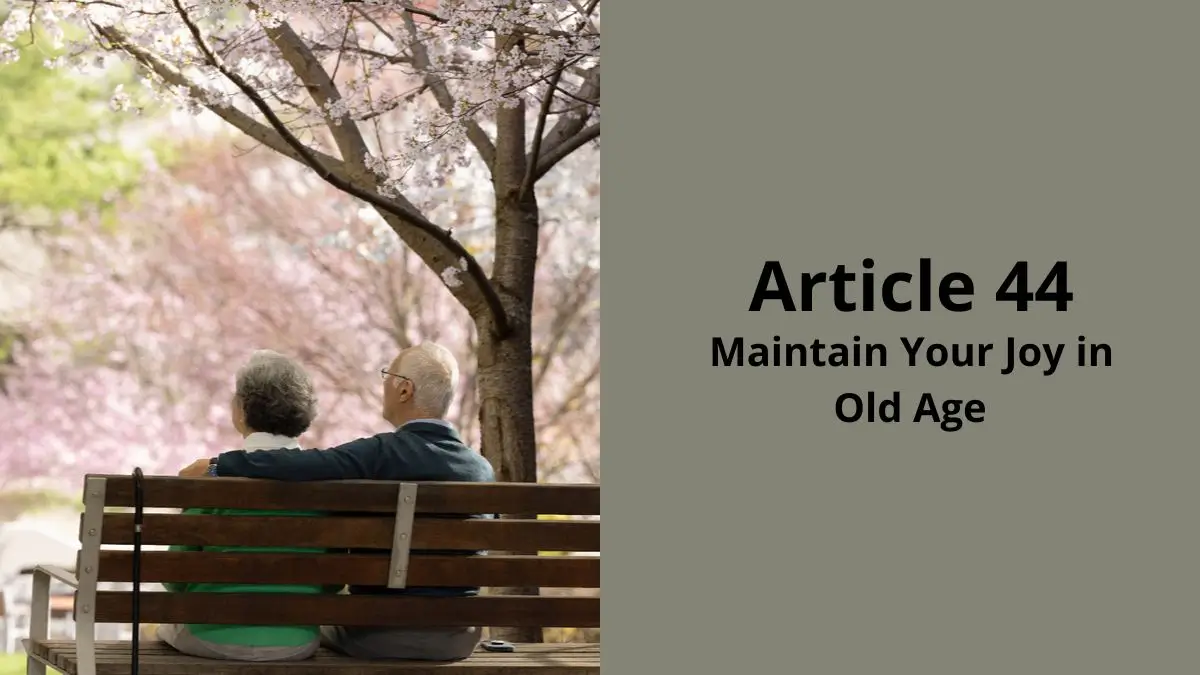
Growing older brings unique challenges, but it also highlights qualities that Jehovah deeply values. Faithful brothers and sisters who have served Jehovah for many years continue to be precious in his eyes, regardless of physical limitations or declining strength. The Bible reassures us that those who remain loyal to Jehovah do not lose their beauty or usefulness with age. Instead, like well-established trees, they continue to flourish and bear fruit.
This article will help us understand how Jehovah views our elderly brothers and sisters, what challenges they may face, and how they can maintain joy despite the difficulties that come with aging. It will also show how the congregation can support, value, and encourage them, reflecting Jehovah’s loving care for those who have faithfully walked with him throughout their lives.
- 1, 2. How does Jehovah view faithful brothers and sisters who are growing old? (Psalm 92:12-14; see also the illustration).
- 3. Mention how Jehovah used some of his elderly servants to accomplish his will.
- 4. According to Proverbs 15:15, what quality helps older ones face difficulties? (See also the illustration).
- THE CHALLENGE OF MAINTAINING JOY
- 5. What things might discourage us as we grow older?
- 6. a) What other things might discourage us?
- 6. b) What should older ones consider when deciding whether to stop driving? (See the article “Should I Stop Driving?” in this magazine.)
- 7. What can help us if we feel sad about the possibility of not seeing the end of this system?
- 8. How might age-related problems affect older ones?
- TIPS FOR MAINTAINING JOY
- 9. Why is it good to accept help? (See also the illustrations.)
- 10. Why should we not forget to express gratitude? (See also the illustration.)
- 11. In what ways can we help others? (See also the illustration.)
- 12. What does Jehovah promise his elderly servants at Isaiah 46:4? (See also the illustration.)
- 13. According to 2 Corinthians 4:16-18, what should we remember? (See also the illustration.)
- HOW CAN WE HELP OLDER ONES?
- 14. Why is it important to call and visit older brothers and sisters?
- 15. What can young and old do together?
- 16. Why might it be beneficial to accompany older ones to medical appointments?
- 17. In what aspects of the ministry can we include older ones?
- 18. What will the next study article discuss?
- WHAT WOULD YOU SAY?
1, 2. How does Jehovah view faithful brothers and sisters who are growing old? (Psalm 92:12-14; see also the illustration).
Jehovah looks upon older brothers and sisters with deep affection and honor. In his eyes, they have not lost their worth over the years; on the contrary, they remain beautiful and useful. Psalm 92:12-14 compares them to mature trees that continue to thrive and bear fruit even in their later years.
Jehovah does not focus on gray hair or physical limitations. Instead, he values the spiritual qualities they have cultivated throughout a lifetime of faithful service. Their endurance, loyalty, and love are precious to him. Like strong, well-rooted trees, older ones display spiritual stability and proven faith.
Jehovah deeply appreciates that they have served him during both favorable and difficult times, and he views them as a true blessing to the congregation.
ILLUSTRATION
An elderly couple is sitting on an outdoor bench surrounded by cherry trees in bloom.
Like flourishing mature trees, older brothers and sisters are beautiful and continue to prosper. (See paragraph 2.)
3. Mention how Jehovah used some of his elderly servants to accomplish his will.
The Bible shows that Jehovah continued to use his servants even when they were advanced in years. For example, Sarah was elderly when Jehovah promised that she would have a son, from whom a great nation and the Messiah would come. Moses was over 80 years old when Jehovah sent him to lead Israel out of Egypt. And the apostle John, already aged, was inspired to write five Bible books.
These examples prove that Jehovah does not view age as a limitation. Rather, he values experience, faith, and loyalty. To him, older servants remain valuable instruments for carrying out his purpose.
4. According to Proverbs 15:15, what quality helps older ones face difficulties? (See also the illustration).
The quality that most helps older brothers and sisters face difficulties is joy. Proverbs 15:15 says that a cheerful heart is like a continual feast. Although advancing age brings physical and emotional challenges, a joyful and positive attitude can make a significant difference.
Joy does not remove problems, but it helps us endure them with balance and inner peace. This joy comes from a close relationship with Jehovah, trust in him, and a spiritual outlook. When older ones cultivate this quality, they can face age-related limitations without losing hope or motivation.
ILLUSTRATION
The same couple, embracing and smiling beneath the branches of a blossoming cherry tree.
A joyful and positive attitude helps older ones cope with the challenges that come with age. (See paragraph 4.)
THE CHALLENGE OF MAINTAINING JOY
5. What things might discourage us as we grow older?
As we age, various factors may discourage us. We may feel sad about no longer being able to do what we once could or about becoming more dependent on others. Losing strength, health, or mobility can be painful, and comparing our present situation with our younger years can deepen that sadness, as mentioned at Ecclesiastes 7:10.
Experiences like those of Ruby or Harold reflect frustration, physical pain, and difficult changes. If not handled properly, these limitations can affect our emotional well-being. Still, the article helps us recognize that such feelings are normal and that Jehovah fully understands what we are experiencing.
6. a) What other things might discourage us?
Another discouraging factor may be the loss of independence. Relying on a caregiver, moving in with a relative, or giving up driving can be emotionally challenging. These situations might make us feel useless or like a burden to others.
However, the article reminds us that even if we can no longer do certain things on our own, we are still very precious to Jehovah. He does not measure our worth by what we can physically accomplish but by who we are inside—our love and loyalty to him and to our brothers.
6. b) What should older ones consider when deciding whether to stop driving? (See the article “Should I Stop Driving?” in this magazine.)
Older ones should honestly evaluate their health, eyesight, and reflexes when deciding whether to stop driving. Although this decision can be very painful, it is essential to consider personal safety and the safety of others. Acknowledging limitations does not mean losing dignity; it shows wisdom and love.
Jehovah understands how difficult this step can be, and the congregation can provide practical and emotional support. Remembering that our value does not depend on independence helps us accept such changes with peace and balance.
7. What can help us if we feel sad about the possibility of not seeing the end of this system?
If we feel sad thinking that we may not witness the end of this system, it helps to remember Jehovah’s patience. Isaiah 30:18 and 2 Peter 3:9 explain that Jehovah is allowing time for more people to come to know him and be saved. Reflecting on the benefits others—perhaps even our own relatives—may receive because of this patience can change our perspective.
Rather than focusing on what we may not see, we can rejoice that Jehovah is acting with love and mercy. This helps us maintain hope and joy.
Age-related issues such as pain, fatigue, or illness can affect our emotions and may lead us to say or do things we later regret. The Bible acknowledges that we all stumble in speech and provides the example of Job, who spoke impulsively while under intense suffering.
Although age and health challenges influence us, they should not be used as an excuse for unkind behavior. If we realize that we have hurt someone with our words, the right course is to apologize, following the counsel found at Matthew 5:23, 24.
ADDITIONAL COMMENT
Health problems and limitations can affect our mood and sometimes cause us to react poorly. The Bible recognizes that this can happen, as in Job’s case. Still, Jehovah expects us to keep striving to be kind. When we fail, humbly apologizing helps us preserve peace and joy.
TIPS FOR MAINTAINING JOY
ILLUSTRATION
A cherry tree branch full of blossoms. Several circles show activities that brothers and sisters engage in to maintain joy in old age. The images are repeated in paragraphs 9 to 13.
How can we maintain joy despite the challenges of old age? (See paragraphs 9 to 13.)
9. Why is it good to accept help? (See also the illustrations.)
Accepting help is beneficial because it reflects humility and strengthens love within the congregation. Galatians 6:2 encourages us to carry one another’s burdens. Although we may initially hesitate to accept help because we do not want to be a burden, doing so allows others to experience the happiness that comes from giving, as stated at Acts 20:35.
In addition, accepting help allows us to feel the genuine care and concern of our brothers and sisters. This benefits not only those who help but also us, as it strengthens bonds of love and contributes to our joy.
ILLUSTRATION
An older sister walking arm in arm with a younger sister as they go grocery shopping.
(See paragraph 9.)
10. Why should we not forget to express gratitude? (See also the illustration.)
We should not forget to express gratitude because it greatly encourages those who help us. Colossians 3:15 and 1 Thessalonians 5:18 remind us of the importance of being thankful. At times, we may feel gratitude but fail to express it.
However, a smile, a sincere “thank you,” or a simple note can deeply touch the heart of someone who supports us. Expressing gratitude strengthens relationships, creates a positive atmosphere, and helps us maintain a joyful and humble attitude.
ILLUSTRATION
An older sister writing a thank-you card.
(See paragraph 10.)
11. In what ways can we help others? (See also the illustration.)
We can help others by sharing our experience, time, and wisdom. Older brothers and sisters have much to offer; they are like living libraries filled with spiritual knowledge. By listening to younger ones, answering their questions, and encouraging them to obey Jehovah, we strengthen their faith.
Psalm 71:18 expresses the desire to continue declaring Jehovah’s works even in old age. When we focus on giving rather than dwelling on our limitations, we experience joy and continue to be a source of encouragement to others.
ILLUSTRATION
An older brother listening attentively to a younger brother who is sharing something with him.
(See paragraph 11.)
12. What does Jehovah promise his elderly servants at Isaiah 46:4? (See also the illustration.)
At Isaiah 46:4, Jehovah promises that he will support and carry his faithful servants even into old age and gray hair. Though we may feel physically weak, Jehovah never grows tired or weary. He gives us strength when we ask for it and always keeps his promises.
Knowing that Jehovah personally supports us, cares for us, strengthens us, and fills us with peace and joy gives us great comfort. Each time we experience his help, our confidence in his enduring love is reinforced.
ILLUSTRATION
An older brother offering a prayer.
(See paragraph 12.)
13. According to 2 Corinthians 4:16-18, what should we remember? (See also the illustration.)
We should remember that old age, suffering, and poor health are temporary. According to 2 Corinthians 4:16-18, present difficulties are momentary and produce a glorious future. The Bible promises a time when sickness and weakness will completely disappear.
This hope helps us avoid discouragement and maintain joy, knowing that our best days are not behind us but still ahead.
ILLUSTRATION
An older sister in a wheelchair is reading the Bible and imagines herself young again in Paradise, standing up from the chair.
(See paragraph 13.)
HOW CAN WE HELP OLDER ONES?
14. Why is it important to call and visit older brothers and sisters?
It is important to call and visit older brothers and sisters because many struggle with loneliness. Hebrews 13:16 encourages us not to forget to do good. A phone call or visit reassures them that they are loved and remembered.
Although we are often busy, making specific plans and using reminders can help us follow through. These expressions of love strengthen their spirits and benefit us spiritually as well. Visiting older ones is a practical way to show Christian love.
ADDITIONAL COMMENT
Many older brothers and sisters feel lonely; therefore, a phone call or visit reminds them that they are loved and valued. Small gestures of kindness demonstrate Christian love and provide great encouragement.
15. What can young and old do together?
Young and old can enjoy sincere and uncomplicated friendships. Proverbs 17:17 highlights the value of true friendship. They can talk, share experiences, watch JW Broadcasting programs, laugh together, or help one another in practical ways.
Differences in age do not prevent close relationships. These friendships enrich both groups: young ones gain wisdom, and older ones feel accompanied and appreciated.
16. Why might it be beneficial to accompany older ones to medical appointments?
Accompanying older ones to medical appointments can help ensure better care and understanding. Isaiah 1:17 encourages us to defend those in need. Companions can take notes, ask questions, and make sure medical instructions are clearly understood. For many older ones, having someone with them provides reassurance and peace of mind. This practical support demonstrates genuine love and concern.
17. In what aspects of the ministry can we include older ones?
We can include older brothers and sisters in various aspects of the ministry, such as the literature cart, home Bible courses, or letter writing and telephone witnessing from home. Even if they cannot go from door to door, they still have a valuable role.
Proverbs 3:27 and Romans 12:10 encourage us to honor them. Making this effort strengthens their spirits and shows that their service continues to be valued.
18. What will the next study article discuss?
The next study article will discuss how to maintain joy while caring for an elderly family member, a child, or a sick friend. It will help us face that responsibility with balance, love, and trust in Jehovah without losing our joy.
WHAT WOULD YOU SAY?
What things might discourage older brothers and sisters?
Older ones may be discouraged by physical limitations, loss of independence, health problems, and sadness over the possibility of not seeing the end of this system.
What can older ones do to maintain joy?
They can accept help, express gratitude, continue helping others, pray for strength, and remember that present difficulties are temporary.
How can we help elderly Christians?
We can help them by visiting and calling them, accompanying them to medical appointments, fostering friendships, and facilitating their participation in the ministry.
Leave a Reply
Related posts